Showing posts with label 4G. Show all posts

How to free up space with storage tools in Android 7.1

Squeezing out enough storage space is one of the ever-present struggles of smartphone life. Android 7.1 brings some integrated tools to handle this all in one spot. To check out what’s here, go to Settings > Storage.As with previous versions of Android, you’ll see a breakdown of storage used by category.


However, check out a new tool by selecting Manage Storage at the top of the list. You’ll see an option for Smart Storage, which when toggled on will automatically remove backed up photos and videos when your phone's storage is almost full. If you have a Pixel (the first phone with Android 7.1), you get free storage at full resolution. 


Then, if you select Free up now you get more specific options for removing items. Since these items look for apps or photos that haven't been used in a long time, you may not see a ton of suggestions right away, especially if you have a new Pixel or just reset your device with Android 7.1
Finally, you can get more specific details about which apps and other elements of your phone are the main storage culprits. 


From the shared storage menu you can touch on any of the categories, like apps, images, or videos. This will let you know what’s using up the most room.
Also, touch the overflow menu and go directly to Free up space if you know you want to start right away on some purging.

The best programs to run Android apps on your Windows PC


From time to time you’ll hear about yet another effort to bring Android to the desktop. Yes, there’s an official effort to do this straight from Google by bringing the Play Store to a select number of Chromebooks.
But what if you want this now, or don’t want to buy a new computer to experience what it’d be like to use Android apps on your PC? With a little bit of digital elbow grease, it’s possible. You can run some of your favorite apps and engage in Android gaming by trying out one of the many third-party solutions. I looked at several software choices that offer this, and came away with four solid options that will have you up and running with Android on your Windows PC rather painlessly.


The best: Remix OS


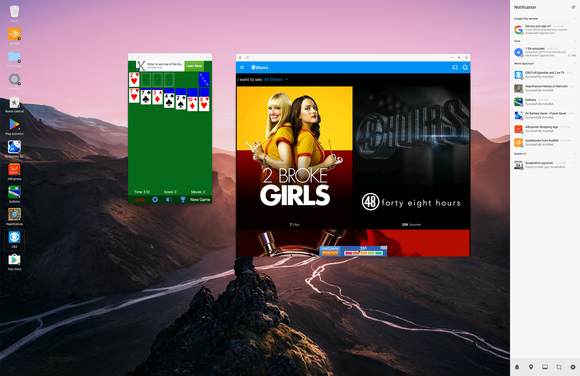
Remix OS is my top choice because it’s clearly the had considerable development work. It’s a full-blown desktop OS that’s based on Android. Everything you need to be productive or entertained is there, with the Google Play Store available and of course the ability to use Google Drive, Gmail, Chrome, or any non-Google apps for productivity.
The developers have built a slide-out notification menu and repurposed the software buttons without significantly changing the way that Android works. I played Clash of Clans, solitaire, and fooled around in Chrome while trying Remix OS out. It was quite stable and was the first time I felt that Android had actual capabilities to move beyond the smartphone or tablet.


It also may sound like a small matter, but being able to tap into apps like Snapchat that are currently mobile-only is an appealing part of the experience. It speaks to how blending the mobile and desktop worlds can mean less time shifting between devices (with more potential distractions, of course).
However, it’s the most complicated of these software packages to set up. You need to disable Secure Boot and then choose Remix from the boot menu in Windows—basically, you're dual-booting. If you know your way around a PC well enough you’ll be fine, but if this concept sounds foreign you’ll need to be willing to leap through several hoops to learn what to do.


Remix is very stable and runs Android Marshmallow, although I wouldn’t necessarily recommend using it as your primary PC unless your computing needs are pretty minimal. And unfortunately touch support didn’t work on my Surface Pro 4, unlike some of the other alternatives that I tried here. However, I suspect that touch would work with one of the many supported devices. However, I came away impressed at what Jide, the company behind it, has built here. It’s especially a great option if you want to do some Android gaming, as it handled numerous titles very well.


Bluestacks


Available for both Mac and Windows, Bluestacks has a clear focus on gaming with several titles waiting for you to download once you fire it up. You go through the typical Android setup process, Lollipop style. The interface makes clever use of tabs so that you can keep multiple apps running at once.


There are several dedicated buttons along the side that emulate features you’d normally do with a gesture or tap on a mobile device. You’ll find dedicated buttons for  uploading an APK, taking a picture, grabbing screenshots, and shaking the device (handy for those games or apps where this performs some type of action).
There is a large list of suggested games, while I was also able to grab titles like Clash of Clans from the Play Store and get going without a problem.
Installing other Android apps was handy, as it put favorites like Google Keep just a click away on the desktop. Snapchat didn’t work for me, however, giving me an error when I tried to sign in. I found this to be the case with other apps as well, so your mileage may vary.


Another component of the platform is BlueStacks TV, which allows you to stream some of your gaming action or view other live streams that are powered by Twitch. While I’m not a huge fan of the video game streaming phenomenon, this is as good a way as any to do it if you want to watch some mobile games in action.
In all the capabilities are pretty impressive, but I did find the performance to be slow and buggy at times.


Amiduos


The Lollipop-powered Amiduos puts a stock version of Android on your PC, sans the Google Play Store. It comes preinstalled with Amazon Appstore and has all the sideloading capabilities of Android so you can install an APK of the Play Store if you want to get more Google-powered apps on your PC.
But I used this as an opportunity to check out the whole Amazon Underground scene. You get a ton of paid apps for free, although you have to download and update them through Amazon’s store instead of Google’s.


Amiduos also gives you have a more traditional Android experience. I also found it to be the most responsive version of Android to work with the touch screen on my Surface. It’s still not as hyper responsive as something like a Pixel C or an iPad, but it was neat that this experience could be hacked together.


Otherwise, you’ll need to rely on mouse clicks and drags to work through the interface, which is pretty close to a stock build of Lollipop. It was a pretty solid setup on my Surface Pro 4, though it did use enough processor power to keep the fan running whenever it was on (I have 8GB of RAM and an i5 processor).
In all operation was smooth, however, and didn’t require a huge learning curve.


Andy


Andy has its merits, but I took issue with some elements of the experience. The platform is loaded with ads and tries to install a Chrome extension that changes your default search page in Chrome. This happened even though I clicked the box to decline this feature. Not cool.


It does handle much of Android well, especially when playing Android games. The build is based on Marshmallow, and it was quite responsive to touches on my Surface. The stock build was easy to navigate, although you need to sideload the Play Store as this also instead comes preinstalled with the Amazon Appstore.


It’s a pretty good option for gaming and was rather easy to use. But keep an eye for all of those unwanted “extras” that are baked in.


The future of Android


If nothing else, this exercise made me excited for what it’ll be like to have Android apps on Chromebooks. There are already some good apps and games out there for those Chromebooks that are capable of running the Google Play Store. You can peer down the road and see that Android can be useful on a desktop, though it’s still going to take some work to make it something that I’d want to use everyday.


How To Check If Your Smartphone Is VR Compatible?


There are a few requirements your smartphone has to satisfy in order to support VR content. It requires the gyroscope, magnetometer, and accelerometer sensors to bring the virtual reality in front of you. Here are a few methods which can help you know whether your smartphone is VR compatible or not.

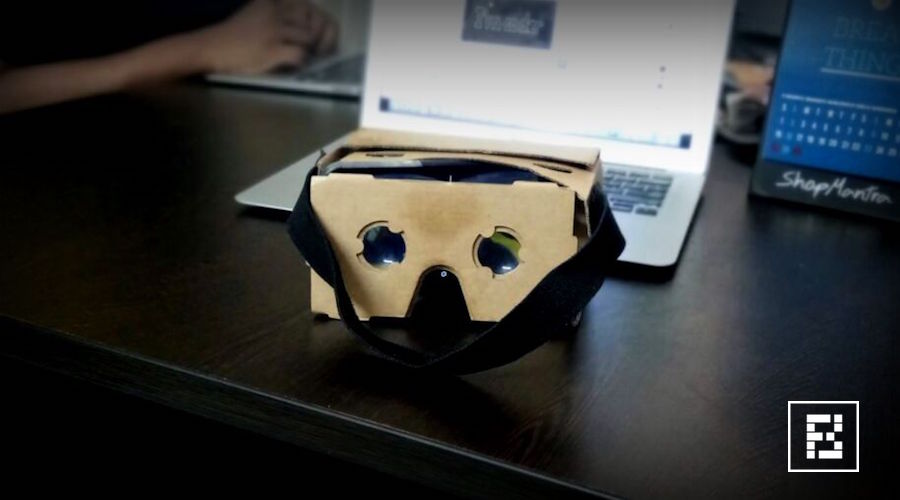
here are a lot of VR headsets out there. The Oculus Gear VR, Google Daydream, HTC Vive, or the minimalistic Google Cardboard. These are the popular ones but you can find a of number VR headsets on e-commerce websites in different price segments.

There is one thing that many people including me are curious about. Is my smartphone VR compatible? Many of us don’t have much idea about how these futuristic helmet work with our smartphone. The feature videos from their makers mostly show a smartphone sliding inside headset and one enters the world of virtual reality. So, in this article, there are a few methods which you can use to check if your smartphone is compatible with VR headsets or not.

What are the requirements?

For your smartphone to be VR compatible, your device should have the following sensors:

Gyroscope & Accelerometer

The task of the accelerometer sensor is to detect the linear orientation of your smartphone. For instance, when you move your smartphone from portrait to landscape mode the screen rotates because the accelerometer sensor comes at work.
The Gyroscope sensor is used to check the tilt or twist movements of your smartphone. For example, if you place your phone on a table and rotate it horizontally then it’s the gyro sensor which detects the change in its orientation. The accelerometer sensor can’t do this, it can only detect linear changes in the orientation.
The gyro sensor is a must for your smartphone to be compatible with a VR headset. The accelerometer sensor is generally available in almost all the smartphones out there.

Magnetometer

This is also known as compass sensor. It is used to know the direction of the phone with respect to earth’s magnetic field. It helps your phone decide which direction is North.

Method 1: Use VR-checking apps on Play Store

There are a bunch of apps available on the Google Play Store which can help you get the answer for the question — Does my smartphone support VR?
These apps check whether your smartphone has the gyroscope and magnetometer sensors. You can try these apps on Google Play store to check whether your smartphone supports VR.

EZE VR


With a single tap, this app can detect whether your smartphone has the required sensors. You need to tap Check and it will be a matter of seconds for the EZE VR to tell if your device supports VR.

VR Checker


Unlike, EZE VR, the VR Checker doesn’t require even a single tap. It is able to tell whether your smartphone is VR compatible, displays other information like device name, screen resolution, screen size, etc. It tells you whether your device is Optimum, Compatible, or Incompatible for VR headsets.

Method 2: Using the YouTube app

The app tells you that you can use your smartphone to watch VR content. There is a simple method you can try.
  1. Update the YouTube app on your smartphone to the latest version.
  2. In your YouTube app, open a 360-degree video. You can also go to the 360-degree videos channel to find some amazing content.
  3. Go full-screen and put your phone in landscape mode.
  4. Tap the button shaped like Google Cardboard logo.
  5. Your screen will divide into two parts showing the same video.
  6. Try to tilt and rotate your smartphone and check if the video also rotates. If it does, then congrats, your smartphone can play VR.
Important: Without the gyro sensor, you will be abe to play the 360-degree videos but you won’t be able to move in the video.

Method 3: Google Cardboard App

The best cases for the Galaxy S7


Yes, you want a case on it


The Galaxy S7 is a beauty. But all that glass and metal isn't designed for the rigors of real life. Juggling groceries, kids, wallets, and just the occasional bout of slippery fingers are enough to send your phone flying at any moment.
You need a case, but deciding whether to enclose your phone inside of a mini tank or a svelte glove is a very personal choice. Wallet cases are also becoming popular, giving you one less thing to carry around.
We've hauled in an extensive selection of some of the best cases out there and checked them out in order to offer some recommendations. No matter your preference, there's a Galaxy S7 case out there for you.


Samsung LED wallet cover


I used this roundup as an opportunity to try out this whole “wallet case” thing. It’s extremely popular in Europe, as just about every other case I saw during a recent trip was a wallet case. I’m seeing it catch on more here, and the Samsung option is a very good one. 
You should probably stick to two cards in the flip-out cover (three will work, but it’s a squeeze). But if that’s all you need for where you’re headed, it’ll definitely free you from the need to also take a wallet. The LED lights are nice to have, as they display the time, notify you of a missed call or text, and show the battery charge percentage. However, you have to live with the extra bulge from the case and constantly flipping it open and closed every time you want to use your phone.

Recommanded :  If you bring the Samsung Note7 on a plane, you could be arrested

Five to Try: FIFA Mobile Soccer takes the pitch, and Sprayscape serves up surreal VR photos


If you’re a footie fanatic, then this week’s release of FIFA Mobile Soccer probably has you pumped up—it’s EA Sports’ latest free-to-play Android take on its long-running simulation, offering an event-filled career to play through. It also leads this week’s Five to Try column, which has a few other new and updated picks to consider.
Google’s Sprayscape is an intriguing, albeit offbeat Android Experiment that lets you create warped photospheres for VR, while Amazon’s new Music Unlimited streaming service undercuts Spotify on price while seeming comparable on content. Also new this week is the great Flappy Golf 2, which is as goofy and fun as it sounds, as well as a Skylanders Creator app that lets you custom-build heroes and 3D-printed toys.

FIFA Mobile Soccer


EA Sports’ annual FIFA soccer simulation has been top-class for years now, but rather than drop a new release each year, FIFA Mobile Soccer is the one app you’ll need for some time to come. FIFA Mobile Soccer will be regularly updated with new events, updated team and roster info, and other tweaks going forward, much like EA’s Madden NFL Mobile and the recent NBA Live Mobile.

At its core, FIFA Mobile Soccer doesn’t deviate too strongly from last year’s entry: the touch controls are super streamlined, although virtual buttons are also available, and the game looks pretty sharp on a smartphone. The campaign is based on the FIFA Ultimate Team mode, wherein you’ll collect player cards to build a killer squad and play through an array of drills, matches, and other challenges. Typical freemium restrictions are here, including an energy meter, and there are ample opportunities to spend money. But with a little patience, you’ll find plenty of sharp soccer action to play for free here.

Sprayscape

Google’s Cardboard Camera is one of the must-try Cardboard VR apps on Android, as it lets you create a realistic photosphere of your surroundings with ease. Sprayscape, meanwhile, is something different: it still lets you capture immersive recreations of what’s around you, but the goal isn’t accuracy or realism. Instead, you’ll tap anywhere in the 360-degree virtual room to fill it with a photo “spray” from your camera.
Keep tapping all around and you can create something semi-authentic, albeit with odd breaks and distortions. But the purpose is really to let you customize something original and unique, and the app can be used to create trick photography scenes or merge together multiple environments into one. The results can then be viewed in a web browser, on your phone, or via a Cardboard headset. It’s another curious little Android Experiment from Google: not essential, but worth a few minutes of fiddling if you like weird little creative apps.

Flappy Golf 2

The original Flappy Golf was a free and fantastic treat, so we’re thrilled to see Noodlecake return to the greens with Flappy Golf 2. Like the original, it takes the tap-to-flap premise of short-lived mobile phenom Flappy Bird and pumps it into a side-scrolling golf game, in which you must reach the cup with as few flaps as possible. In short, it’s Super Stickman Golf with flaps instead of swings.
And in this case, the awesome Super Stickman Golf 3 provides the 29 current courses with more promised down the line. It’s totally free to play, although you’ll encounter ads—both small on-screen banners and occasional pop-ups. Also, local multiplayer is currently missing despite being in the Google Play listing, which early players are a little upset about. Still, like its predecessor, Flappy Golf 2 is a blast.

Amazon Music

Amazon Prime members who are happily locked into the retailer’s discount and perk-heavy ecosystem, take note: the company finally has a streaming music service that can compete with the likes of Spotify and Apple Music. Launched this week, Amazon Music Unlimited promises tens of millions of streaming, ad-free songs, seemingly putting it on par with the industry leaders.
The existing Prime Music service, which comes free to Prime subscribers, only has a few million tracks and lacks most newer releases, but Music Unlimited stands apart… and also costs extra money, as a result. Prime members can add it for $8/month or $80/year, cheaper than standalone competitors, while non-members pay $10/month. Still, if you’re already reaping the benefits of Prime, you’ll save a couple bucks a month by switching to Music Unlimited—assuming it has all the same artists and tracks you love. Find out by snagging the free 30-day trial.

Skylanders Creator


Skylanders popularized the toys-to-life console game experience, and while rival Disney Infinity bit the dust earlier this year, Activision’s franchise keeps on chugging. New entry Skylanders Imaginators is out on PlayStation 4, Xbox One, Wii U, and older hardware this week, but there’s also a fun companion app available on Android that lets you customize your own characters.
With Skylanders Creator, you can build your own cartoonish warrior using an array of apparel, weapons, fighting techniques, and more, and then transfer that character into the console game. Better yet, you can order a custom 3D-printed, NFC-chipped figurine of the creation, which you can then bring into the game with the portal peripheral. Even if you don’t plan on playing the new Skylanders on a console, this could be a fun app for kids to get creative with character designs.

How to encrypt your Facebook messages with Secret Conversations


Facebook's new encrypted messaging feature, Secret Conversations, is now live for everyone on Android and iOS.

 Good news, privacy enthusiasts: Facebook’s one-on-one encrypted messaging feature called Secret Conversations is now live for all Android and iOS users. 
Secret Conversations allows Messenger users to send end-to-end encrypted messages to their Facebook friends. There are a few caveats, however. First, it only works on a single device. Facebook says it doesn’t have the infrastructure in place to distribute encryption keys across your phone, tablet, and PCs.


You also have to explicitly start a Secret Conversation in Messenger. Encryption isn’t the default mode, and encrypted messages are not integrated into the primary thread of your conversations with a given contact.
In other words, if Alice and Bob have been chatting for years on Messenger, they’ll have to start a separate encrypted thread, and that encrypted thread will never integrate with their original, unencrypted thread.
That approach is very unlike what Facebook-owned WhatsApp is doing. The popular messaging platform automatically encrypts messages for all users if they have an encryption-compatible version of WhatsApp on their phone.
The final caveat for Facebook Messenger is that encrypted messaging only works in one-to-one messaging. Group conversations are not included in Secret Conversations.
Now that we’ve got the preamble out of the way, here’s how to use Secret Conversations. For our example, we’re using Messenger for Android but Messenger on iOS works similarly.

How to use Secret Conversations


 From the Messenger landing page, tap on your profile section, which is the person icon on the upper right of the screen. Scroll down until you see Secret Conversations and tap it. On the next screen, make sure the Secret Conversations slider is activated. Once it is, Secret Conversations are enabled for your device.
There are two ways to start an encrypted conversation in Messenger. The first is to create a new message as you usually do. Right at the top of the message creation screen you’ll see a lock icon next to a slider button. Click that and the screen theme changes color from blue to black. Now, choose the contact you want to start an encrypted conversation with, and you’re on your way.
After you send an encrypted message the person receiving it will have to agree to use the Secret Conversations feature. Once they do, they’ll see your message.
The second way is to initiate an encrypted conversation from a pre-existing message thread. Tap the i icon in the top right-hand corner of the message thread, and on the next screen tap Secret Conversation. The screen will turn to a black theme again, and you’re good to go.
To view an open secret conversation thread just choose it from the list of open message threads on the main screen of the app.
Secret Conversations work almost like regular Facebook messages but not quite. You can send text, emoji, stickers, and pictures; however, gifs, videos, voice calling, and payments are not supported.


Secret Conversations also offers a Snapchat-style self-destruct setting that you can adjust on a per-conversation basis. Open a secret conversation and then tap the stopwatch icon on the far right of the text entry area. This lets you set how long your messages remain visible on the other person’s device once they’re read. You can let them to last from 5 seconds to one day, or turn off the self-destruct setting altogether.
 That’s about all there is to the new Secret Conversations feature. You can use it as the standard way you talk to people on Messenger—though that’s a conscious choice you’ll have to make every time you start a new message thread—or just use it for sensitive topics.